
 +994 50 503 67 66
Blog
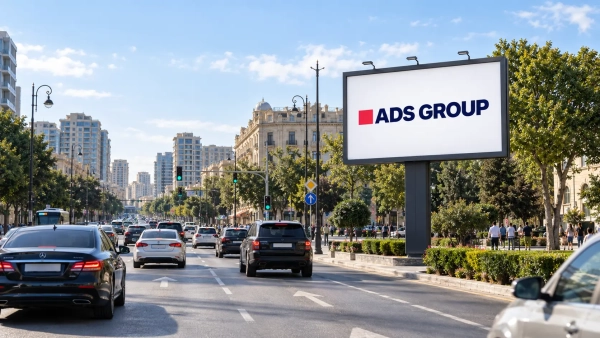
How Should You Choose the Right Billboard Location in Baku?
Location is one of the most important factors affecting billboard performance. A professionally designed advertisement placed at the wrong point may not be sufficiently visible, reach its audience or deliver the expected result. A billboard with a simple, clear message, however, can strengthen brand awareness and attract potential customers when placed in the right area.
Not every street, avenue and junction in Baku has the same advertising value. Heavy traffic may move too quickly for a message to be read, while a location with lower traffic may offer a longer viewing time. A billboard near a shopping centre may suit retail, whereas a B2B service may perform better near business districts.
When planning billboard advertising in Baku, businesses should therefore choose the location best suited to the campaign—not merely the most central or expensive one. Audience, traffic, viewing angle, surface orientation, surroundings and budget should all be evaluated together.
Why is the right billboard location important?
In outdoor advertising, people do not search for the advertisement; it appears along their daily route. Location determines who sees the message, how often they see it and under what conditions.
A well-selected location can:
Increase the likelihood of reaching the target audience;
Create repeated exposure along the same route;
Make the message easier to read;
Encourage visits by being close to a branch or point of sale;
Improve the efficiency of the advertising budget;
Associate the brand with a particular area and audience.
At a poor location, even a large billboard may be hidden by trees, signs, buildings or other structures. It may face away from the main traffic flow, have weak lighting or reach an irrelevant audience.
1. Define the campaign objective
Before selecting a billboard, determine why the campaign is being run. The appropriate location changes with the objective. Common objectives include brand awareness, promoting a new shop or branch, launching a product, announcing a limited offer, generating enquiries for a property project, promoting an event, strengthening market position or directing people to a specific address.
For a shop opening, a billboard on the main road leading to the shop may be best. For broad awareness, several connected high-traffic routes can be more effective. For property, the routes used by likely buyers and the roads leading to the project may matter more than a generic city-centre location.
2. Identify the audience and its routes
The best location is one your audience sees regularly. Analyse not only age and interests but also how people move through the city:
Where do potential customers live and work?
Which roads do they use between home and work?
Do they travel by car, public transport or on foot?
Is the product tied to a specific area?
Are they concentrated in retail, business, education or residential zones?
At what times is visibility most important?
Education and event campaigns for younger audiences may suit locations near universities, transport stops and busy pedestrian zones. Automotive and premium-service campaigns may be planned on routes with strong vehicle traffic and a relevant income profile.
3. Evaluate vehicle and pedestrian traffic together
High traffic increases a location’s value, but volume alone is not enough. The type of traffic and the conditions in which people see the advertisement also matter.
Vehicle traffic
For drivers, assess the billboard’s relationship to the road, viewing distance and traffic speed. The surface should face the direction of travel and be visible early enough for the message to be understood.
Pedestrian traffic
Pedestrians may view an advertisement for longer. Retail streets, stops, routes to metro stations, parks and public spaces can suit pedestrian campaigns. However, high footfall does not guarantee audience relevance.
Waiting points
Intersections, traffic lights and places where vehicles slow down may create longer viewing time. Placement must nevertheless comply with legal and road-safety requirements.
4. Check the viewing angle
Being close to the road does not automatically mean being visible. A surface parallel to the road or facing the wrong direction may be seen only at the last moment.
Check which traffic direction can see the billboard, whether it sits within the driver’s natural line of sight, whether it is fully visible from a distance, and whether bends, bridges or junctions affect the view. For a double-sided structure, each side may have different value: one may reach morning traffic entering the centre, while the other reaches evening traffic returning to residential areas.
5. Consider viewing distance and reading time
The message should become visible and readable before the audience reaches the structure. Distance is affected by road shape, billboard height and size, trees and buildings, signs and competing structures, traffic speed, font size and contrast.
A fast road requires a short headline, large type and a simple visual. At a slower urban point, an address, campaign date or brief extra detail may be possible. Design should match the real viewing time.
6. Check for obstructions
A location that looks good on a map must be inspected in real conditions. Branches, lamp posts, traffic signs, bus-stop structures, other advertisements and regularly parked large vehicles may block the surface.
Confirm that the entire surface is visible, consider changes by time of day and season, check for temporary construction, and determine whether the billboard is visually lost among other ads. Inspect it from the audience’s direction and actual viewing distance—not only from close range.
7. Compare daytime and night-time visibility
On many Baku routes, much of the audience travels in the morning and evening. Check external lighting, evenness of illumination, nearby streetlights and LED screens, how design colours appear at night, glare and shadows, and continuity of electrical and technical support.
If the audience travels mainly in the evening, an unlit billboard may not be suitable even when offered at a lower price.
8. Analyse the surroundings and advertising density
The visual environment directly affects attention. In an area crowded with signs, screens and ads, a new billboard may struggle to stand out. In a calmer setting, a simple design can appear powerful.
Review the number and size of nearby ads, competitor activity, colours of buildings and street elements, the brightness of the background, sunlight direction and the area’s commercial profile. Competitor presence may indicate a relevant audience, but the campaign will need a distinctive visual language and strategically selected surface.
9. Consider proximity to the point of sale
A billboard can direct action as well as build awareness. Proximity to a shop, restaurant, clinic, dealership or residential project can accelerate decision-making.
Location-based messages may show remaining distance, direction or turn, branch area, memorable contact details, or a campaign date. When the advertisement is not close to the destination, it is better to focus on the brand name, main benefit and a simple call to action instead of complex directions.
10. Evaluate repeated exposure
Regular exposure helps people remember a brand. It can be created by keeping the advertisement at one location for longer or selecting several surfaces along the same route.
A route campaign can also present the message in stages: the first billboard attracts attention, the second explains a benefit and the third gives a call to action. Each surface should still make sense independently.
What types of areas in Baku are suitable for billboards?
City entrance and exit roads
Suitable for broad audiences and long-term awareness, including automotive, property, banking, telecommunications and major consumer brands.
Central avenues and junctions
These can offer strong visibility but may also have high advertising density and cost. They suit image, large product-launch and corporate campaigns.
Retail and entertainment districts
Useful for shops, restaurants, cinemas, events, electronics, fashion and consumer products. Locations combining pedestrian and vehicle traffic are especially valuable.
Residential complexes and neighbourhoods
Targeted for supermarkets, clinics, courses, children’s centres, restaurants and local services. Repeated exposure among local residents is the main advantage.
Areas near business centres
Suitable for B2B services, finance, insurance, corporate events, premium products and employer branding.
Suburban roads and highways
Appropriate for large, low-copy designs readable from a distance, including intercity services, automotive, tourism, construction and regional campaigns.
ADS GROUP’s advertising locations section allows users to review structures in Baku and other cities and districts by city, street, type and size.
How should location be selected by business sector?
Retail: roads leading to the shop, retail zones, residential areas and branch surroundings.
Property and construction: routes used by potential buyers, roads to the project, new residential zones and city entrances and exits.
Automotive: high-traffic avenues, city entrances and areas near dealerships and service centres.
Restaurants, cafés and hotels: routes near the venue, tourist areas and business or entertainment centres.
Banking, insurance and telecommunications: a mix of central avenues, business zones and dense residential areas, adjusted to the product audience.
Events and short campaigns: routes to the venue, entertainment zones and locations where the target audience gathers.
Is the city centre always the best choice?
No. The centre may provide high visibility but is not the most efficient location for every business. A company serving specific districts may achieve better results with several targeted billboards near its service area.
Assess location value through three measures: the number of people who see the ad, how closely those people match the target audience, and what action the advertisement encourages. The right location should maximise relevance, not simply reach the largest crowd.
One billboard or several locations?
The answer depends on the objective, duration and budget. One billboard may be sufficient for a local outlet or directional message, while citywide awareness may require a network. Different locations can play different roles: broad visibility at the city entrance, brand reminder on a central avenue, directions near the sales point and repeated exposure in a residential area.
How should location and budget be balanced?
Prices vary by location, size, lighting and rental duration. Neither the cheapest nor the most expensive surface is automatically the best. Include rental, design adaptation, printing and installation, duration, number of surfaces, photo reporting, maintenance and audience relevance in the budget.
Other pricing factors are explained in “Advantages and Prices of Billboard Advertising”.
What should be checked before booking?
Request:
A current daytime photograph;
A night view where possible;
Exact surface dimensions;
Traffic direction and surface orientation;
Exact map position;
Information about obstructions;
Lighting availability;
Available dates;
Printing and installation terms;
The photo report to be supplied after the campaign.
Where possible, view the location from the audience’s direction or request route video footage.
Common billboard-location mistakes
These include choosing only by price, automatically preferring the centre, failing to check surface orientation, ignoring obstructions, failing to inspect night visibility, creating a design unsuitable for the route, and planning too late after high-demand locations have already been booked.
How does ADS GROUP help with location selection?
Professional selection is more than providing a list of vacant billboards. ADS GROUP can analyse the campaign objective, audience, duration and budget; select locations in Baku and the regions; provide photographs and technical details; adapt the design; select printing materials; organise installation; and provide a post-placement photo report.
Its network makes it possible to plan campaigns across several routes rather than being limited to one location.
Frequently Asked Questions
What is the best billboard location in Baku?
There is no single best location for every business. The right place depends on the objective, audience route, viewing conditions and budget.
Is every high-traffic location suitable?
No. Viewing angle, traffic speed, obstructions and audience relevance must also be checked.
Must a billboard be in the city centre?
No. For a local business, a location near the point of sale or service area may be more effective.
Which side of a double-sided billboard should be chosen?
Choose the side facing the target audience’s main direction of travel. Morning and evening flows should be evaluated separately.
How can a location be verified?
Check current photos, map position, traffic direction, viewing distance and night lighting. Route video is also useful.
How early should it be booked?
Lead time depends on location and season. Plan as early as possible for a wider choice during high-demand periods.
Is one billboard enough?
It may be enough for local direction or a specific sales point. Citywide awareness and repeated exposure may require several connected locations.
Conclusion
Choosing the right billboard location in Baku is not simply a matter of finding the most central street or the heaviest traffic. An effective location combines campaign objective, the audience’s real routes, surface orientation, viewing distance, daytime and night-time conditions, surroundings and budget.
When planning billboard advertising in Baku, first determine where the audience is, from which direction it will see the advertisement and what action it should take. Compare structures by potential visibility and commercial value—not price alone.
To select suitable locations and receive an individual advertising plan, contact ADS GROUP. ADS GROUP can present options in Baku and the regions that match your objective, a