
 +994 50 503 67 66
Blog
What Is Lightbox Advertising? Advantages and Areas of Use
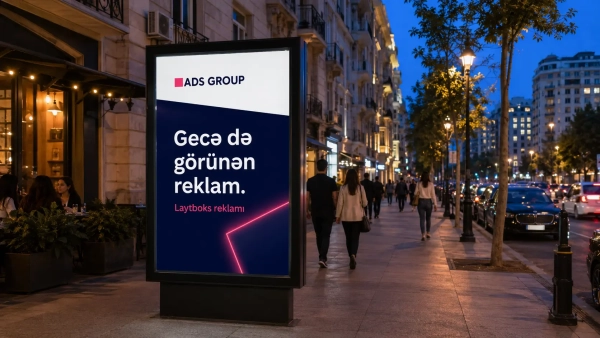
Advertising visibility in the city should not be limited to daylight hours. The visual environment on the streets changes particularly in the evening: natural light decreases, while shop windows, city lights, and digital screens become more prominent. In these conditions, illuminated advertising structures become one of the effective tools for maintaining brand visibility.
One of these advertising formats is lightbox advertising.
Thanks to an internally illuminated structure, lightbox advertising enables the advertising visual to remain visible both during the day and at night. Its compact size, high visual contrast, and easy integration into the urban environment make it a practical outdoor advertising solution for various businesses.
So, what is lightbox advertising, how does it work, and what advantages does it create for businesses?
What is lightbox advertising?
Lightbox advertising is an advertising format in which the advertising visual is placed inside a special structure and illuminated by an internal light source.
The meaning of the word “lightbox” comes directly from the concept of an “illuminated box”.
The lighting system installed inside the structure illuminates the advertising surface from behind. As a result, the poster or advertising visual can remain clearly visible even in a dark environment.
Lightboxes can be produced in different sizes and used in various locations:
on streets;
near pavements;
in shopping centres;
in business centres;
in front of shops and restaurants;
in areas with heavy pedestrian traffic;
at bus stops and other urban advertising locations.
This feature makes lightbox advertising suitable for both outdoor and, in certain cases, indoor advertising.
How does lightbox advertising work?
The basic operating principle of a lightbox structure is fairly simple.
The advertising visual is produced on a light-transmitting material or another material suitable for illumination. The light source installed inside the structure evenly illuminates the visual from behind.
As a result, the advertising surface appears to emit light itself.
This feature is particularly important at night.
An ordinary, non-illuminated poster can lose a significant amount of its visibility in the dark. A lightbox, however, preserves the readability of the advertising message through illumination.
1. Nighttime visibility is the main advantage of a lightbox
One of the most important advantages of lightbox advertising is its potential for more consistent visibility throughout 24 hours.
During the day, the advertising visual looks like an ordinary poster. In the evening and at night, the internal lighting comes to the forefront.
This feature is especially important in areas where people are active during the evening.
Nighttime pedestrian traffic can be high near restaurants, cafés, shopping centres, cinemas, and entertainment venues.
At such locations, an illuminated advertising structure can stand out more strongly against a dark background.
For this reason, one of the key messages of lightbox advertising can be expressed simply as:
Advertising that remains visible at night.
2. It is suitable for reaching pedestrian audiences
Large advertising formats such as billboards and megaboards are mainly used along roads to be seen from a long distance.
A lightbox, however, is an advertising format viewed from a closer distance.
For this reason, it can provide an opportunity for more detailed communication with pedestrian audiences.
For example, a headline used on a billboard must be very short. As a person passes a lightbox more slowly, a product visual, brief campaign information, and a CTA can be presented more comfortably.
However, this does not mean that a lightbox should be filled with lengthy text.
The advertisement should still be understood at first glance.
3. It can make brand colours appear more vivid
Lighting has a significant impact on the visual effect of an advertising design.
In a properly prepared lightbox, colours can appear brighter and more contrasting. An illuminated advertising surface stands out visually, especially against a dark urban background.
This feature is useful for brands with strong corporate colours.
Brand colours, the logo, and key visual elements can be presented more clearly through properly prepared printing and lighting.
The quality of the advertising material is particularly important here.
It should not be automatically assumed that colours which look good on a screen will appear the same after printing and backlighting. The design should be created with the technical characteristics of the actual advertising structure in mind.
4. A lightbox integrates easily into the urban environment
Large megaboard and billboard structures require a considerable amount of space.
A lightbox is a more compact advertising format.
For this reason, it can be used in urban locations with heavy pedestrian traffic where placing large advertising structures would not be appropriate.
Examples include areas in front of shops, business streets, bus stops, and commercial zones.
This feature also makes lightbox advertising attractive for local campaigns.
By placing an advertisement near its business location, a company can both build brand awareness and direct potential customers towards the point of sale.
5. What is the difference between lightbox and billboard advertising?
Both formats can be used within the outdoor advertising category, but their functions are different.
Billboard advertising is large and is mainly used to communicate a message to motorists from a long distance.
Lightbox advertising is more compact and designed to be seen from a closer range.
Another key difference is lighting.
Billboards may use a separate external lighting system. In a lightbox, however, the light is located inside the structure and illuminates the advertising surface from within.
Therefore, rather than deciding which format is better, it is necessary to determine which audience the campaign needs to reach and at which location.
6. What is the difference between lightbox and LED advertising?
Both advertising formats can create high visibility at night, so they may be compared with each other.
However, the technologies are completely different.
LED advertising is a digital screen. It can display video, animation, and changing advertising content.
A lightbox is an illuminated static advertising surface.
An LED screen provides more dynamic content, while a lightbox continuously displays a specific advertising visual.
In some campaigns, this can become an advantage of the lightbox.
When passing an LED screen, a person may not be there at the moment a particular advertisement is shown. On a lightbox, however, the advertising message is always visible.
7. Which businesses is lightbox advertising suitable for?
Lightbox advertising can be used across various sectors.
Restaurants and cafés
A lightbox placed near the venue can present a new menu, special offer, or brand advertisement.
Retail
Shops can display new collections, products, and discount campaigns.
Banks and financial companies
Urban locations with heavy pedestrian traffic can be used to promote new products and services.
Telecommunications companies
It is a suitable advertising format for presenting tariffs and campaign messages.
Real estate
Visuals of new projects can be displayed on high-quality illuminated advertising surfaces.
Events
Lightboxes can be used to promote concerts, exhibitions, festivals, and other events.
The key is for the advertising format to match the business's audience and the campaign objective.
8. How should a lightbox design be created?
The design for lightbox advertising should be prepared with both daytime and nighttime viewing in mind.
Choose a strong visual
The main element of the advertisement should attract attention at first glance.
Keep the headline short
People should be able to understand the advertising message within a few seconds.
Pay attention to contrast
Lighting can change the appearance of certain colours. There should be sufficient contrast between the text and the background.
Position the logo clearly
People who see the advertisement should immediately understand which brand it belongs to.
Avoid unnecessary information
Displaying a phone number, website, social media accounts, address, and a lengthy list of services together on one advertising surface can create visual clutter.
The main principle remains the same:
One advertisement — one main message.
9. How should the right location for a lightbox be selected?
Location is at least as important as design in lightbox advertising.
First, the number of people passing through the location and whether the audience is relevant to the business should be assessed.
If pedestrian traffic is high, the angle from which people see the advertisement should be checked.
If the advertisement will be displayed at night, surrounding light sources should also be taken into account.
On a street with many bright advertisements and shop windows, a lightbox may require stronger visual contrast.
In a darker area, the same structure may automatically attract more attention.
Therefore, alongside the price of the advertising space, its actual visibility potential should also be evaluated.
10. How can a lightbox be used with other outdoor advertising formats?
A lightbox can be used as a standalone advertising format, but making it part of a broader campaign can also be an effective approach.
For example, a megaboard located on a major city motorway can present the campaign's large brand message.
Billboards within the city can continue the visibility of that message.
LED screens can show the dynamic version of the campaign.
In areas with heavy pedestrian traffic, lightbox advertisements can bring people into contact with the campaign from a closer distance.
Thus:
Megaboard → Billboard → LED → Lightbox
become different touchpoints within a unified advertising strategy.
What determines the price of lightbox advertising?
Lightbox advertising prices may vary depending on several factors.
The area where the structure is located, its size, the advertising period, the level of pedestrian and vehicle traffic, preparation of the advertising material, and additional services are among the factors that affect the price.
The price of advertising space in a central, high-traffic area may be higher.
However, choosing only the cheapest advertising space is not always the most cost-effective decision.
The more important question is:
Will the right audience see this advertisement?
The real value of an advertising space is determined by the answer to this question.
Advertising that remains visible at night
Thanks to its illuminated advertising surface, lightbox advertising is one of the outdoor advertising formats that helps brands maintain visibility both during the day and at night.
A properly placed lightbox, especially in urban locations with heavy pedestrian traffic, can communicate the brand message to the audience from a close distance.
However, an effective result is not achieved through an illuminated structure alone.
The right location + professional design + high-quality lighting + a clear message must work together.
As part of ADS GROUP's outdoor advertising solutions, lightbox advertising makes it possible to present brands during both day and night at visible points throughout the city.
Advertising that remains visible at night.