
 +994 50 503 67 66
Blog
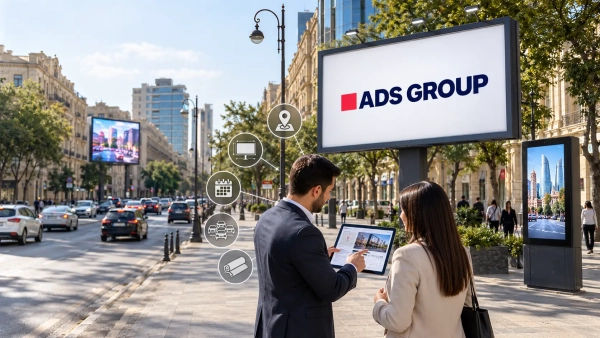
How Are Outdoor Advertising Prices Calculated?
Outdoor advertising is one of the most effective ways for a business to reach a broad audience, gain visibility across the city and build brand recall. However, one of the first questions companies ask when planning a campaign is: how are outdoor advertising prices calculated?
There is no single figure that applies to every advertising project. Two billboards of the same size may have different prices when located in different areas. At the same time, advertising media such as LED screens, scrollers, megaboards, pano displays and lightboxes have different technical specifications and pricing models.
In addition to rental of the advertising location, the final outdoor advertising budget may include design, production, printing, installation, campaign duration and, in some cases, official fees. Therefore, when receiving a quotation, it is important to understand not only the total amount but also what that amount includes.
What is included in the price of outdoor advertising?
The total budget of an outdoor advertising campaign can be expressed simply as follows:
Total advertising budget = advertising-space rental + design + printing or content production + installation and removal + technical maintenance + applicable official fees and taxes
Not all these items are necessarily shown as separate charges in every project. Some advertising agencies include printing and installation in a package price, while others calculate each service separately. When comparing quotations, it is therefore essential to check whether they cover the same services.
1. Advertising location
Location is one of the factors with the greatest impact on outdoor advertising prices. Central streets with heavy pedestrian and vehicle traffic, major intersections, areas around business centres, retail districts and city entrance and exit points offer higher visibility.
The main indicators determining the value of a location are:
Estimated daily pedestrian and vehicle traffic;
Viewing distance from the main road;
Direction and speed of traffic;
Trees, buildings or other obstacles in front of the advertising surface;
Commercial and business activity in the area;
Concentration of the target audience at that location;
Daytime and night-time visibility.
A central location is not automatically the best choice for every campaign. For example, a business serving only one district may achieve better results from an advertising unit on the road leading into that district than from a more expensive billboard in the city centre. A location should therefore be selected according to the campaign objective and audience, not price alone.
In ADS GROUP’s advertising locations section, available advertising units in Baku and the regions can be reviewed by location, type and size.
2. Type of advertising medium
Although billboards, scrollers, LED screens, megaboards, pano displays, lightboxes and CLPs all serve the same purpose—making a brand visible—their prices are calculated according to different principles.
Billboard advertising price
Billboard prices are mainly determined by location, surface dimensions, viewing angle, illumination and placement duration. Printing the advertising poster, installation and removal at the end of the campaign may also be added to the budget.
Billboards are suitable for long-term brand awareness, product launches, sales campaigns and new-location openings. If the same visual will be used for a long period, continuing the campaign after the initial printing cost allows for more predictable budgeting.
Scroller advertising price
A scroller allows several advertising posters to be displayed in rotation on a single unit. The price of scroller advertising depends on the unit’s location, size, lighting, display period and the cost of producing the posters.
The moving mechanism can make the advertisement more noticeable than a static surface. However, the display frequency and the rotation sequence with other posters should be clarified during campaign planning.
LED screen advertising price
LED screens do not require printing or physical poster installation. Their price may be calculated according to:
Screen location;
Screen size and image quality;
Length of the advertising video;
Number and frequency of daily plays;
Campaign duration;
Video or animation production;
Time periods during which the advertisement is shown.
An LED screen is a more flexible choice for businesses that want to change their campaign message quickly, showcase different products and use dynamic visuals.
Megaboard and pano advertising prices
For large advertising surfaces such as megaboards and pano displays, size, height, long-distance visibility, the amount of printing material and the complexity of installation can have a major impact on the budget. Producing a large surface may require more material and specialised technical installation.
These formats are suitable for major highways, wide avenues, building façades and locations visible from a distance. If the objective is large-scale visibility, the higher initial cost may be justified by the broader visual impact.
Lightbox and CLP advertising prices
Lightboxes and CLPs are generally used in areas with heavy pedestrian traffic, at transport stops, near retail premises and along inner-city routes. Their prices are affected by location, unit size, internal illumination, printing material and campaign duration.
These formats are effective for reaching people who live in or move through a particular area at close range. The features of the various formats can be compared on the advertising types page.
3. Size of the advertising surface
As the advertising surface grows, the volume of material required for production, printing and installation also increases. However, price is not calculated solely per square metre. The height of the surface, the need for specialist equipment and safety measures can also change the final amount.
The following should be considered when selecting the size:
From what distance will the advertisement be viewed?
Will the audience be on foot, in vehicles or both?
How many seconds should it take to read the message?
How much text and how many main elements will the visual contain?
How will the advertising surface appear by day and at night?
The largest surface is not always the most effective. The right dimensions should match the location, viewing distance and amount of information in the message.
4. Campaign duration
Outdoor advertising can be planned for periods ranging from a few days for an event announcement to several months for a brand campaign. Rental charges are generally directly related to campaign duration.
Long-term placement may offer the following advantages:
Repeated audience exposure;
A greater likelihood of brand recall;
Distribution of printing and installation costs over a longer period;
Easier advance planning of the campaign budget.
A short-term campaign may be suitable for an opening, event, discount or date-specific offer. In this case, placement and removal dates should be agreed precisely in advance.
5. Design and preparation of advertising materials
Even when a finished design is supplied, the file may need to be adapted to the technical dimensions of the advertising surface. A low-quality visual or one created in the wrong colour profile may not produce the desired result when printed.
Work that may affect the design price includes:
Development of the creative concept;
Copywriting and refinement of the advertising message;
Selection of photographs and other visual material;
Adaptation of the layout to the advertising dimensions;
Preparation of the technical print file;
Video and animation production for an LED screen;
Adaptation of the same campaign to different advertising formats.
In outdoor advertising, design is not merely about appearance. The message must be understood from a distance, quickly and by people who are moving. Excessive text, small type and weak colour contrast can therefore reduce the return on the advertising budget.
6. Printing material and production quality
Printing material should be selected according to the campaign duration, weather conditions, unit dimensions and lighting system. Vinyl, banner, mesh and light-transmitting materials each serve different purposes.
The following factors are considered when choosing a material:
How long the advertisement will remain outdoors;
Resistance to wind, rain and sunlight;
Resistance of colours to fading;
Front or internal illumination of the unit;
Surface dimensions and structural characteristics.
If a cheaper material deforms or loses colour quickly, reprinting the advertisement may create additional costs. Production quality is therefore an important part of the quotation.
7. Installation, removal and technical maintenance
Safe installation requires a professional team and, at some locations, specialist equipment. The height and size of the unit, access to the site and the time at which work is carried out can affect installation costs.
For LED screens and illuminated advertising units, maintenance and monitoring of the electrical and display systems should also be considered. Whether installation, removal and technical support are included in the quotation should be clarified in advance.
8. Official fees and permit procedures
Depending on the advertising type and location, official procedures and fees may apply to the placement and display of outdoor advertising. The State Advertising Agency of the Republic of Azerbaijan regulates and supervises the placement of advertising media and the production and distribution of advertising in open spaces.
According to ADRA’s official information, the required documents are submitted and reviewed, and the advertisement is displayed after permission is granted. ADRA’s official calculator can be used to calculate the state fee and display charge.
Official fees are not the same as the cost of the advertising location, production and installation services offered by an agency. Listing these items separately in the quotation helps prevent unexpected additional expenses.
9. Seasonality and demand for advertising locations
Demand for certain advertising locations may increase during holidays, the end of the year, the back-to-school season, major events and sales campaigns. Popular locations are reserved more quickly during periods of high demand.
Planning a campaign in advance gives a business a wider choice of locations. A last-minute order may mean that the desired unit is unavailable and an alternative location must be selected.
10. Number of advertising units and package placement
A single advertising surface creates visibility at one point. Selecting several locations expands campaign reach and gives the audience repeated exposure to the message.
A package campaign may cover:
Several main avenues across Baku;
Baku and the regions together;
A combination of billboards and LED screens;
A local advertising network near points of sale;
Sequential visibility on city entrance and exit roads.
Choosing more than one location increases the total budget, but the cost per surface and campaign reach efficiency may become more favourable. A customised package quotation should be prepared for this purpose.
Is the cheapest advertising location always the best value?
Building a budget solely around the lowest price may not produce the right result. A cheaper location with poor visibility and few members of the target audience may not generate real business outcomes. Conversely, an expensive central surface will not be efficient if your audience is not present in that area.
Alongside price, the following indicators should be compared:
Relevance of the potential audience;
Viewing distance and angle;
Estimated daily traffic;
Likelihood of repeated exposure;
Campaign objective;
Quality of the advertising material and installation;
Photo reporting and technical support.
The main objective is not to choose the cheapest advertisement, but the solution that delivers the greatest visibility and the most relevant audience within the allocated budget.
What information is needed to receive an accurate quotation?
The clearer the information supplied to the advertising agency, the more accurate the quotation will be. It is useful to include:
Main objective of the campaign;
Product, service or event to be promoted;
Target audience;
Baku or selected regions;
Preferred advertising format;
Campaign start date and duration;
Approximate budget range;
Whether a finished design is available;
Need for printing, installation and content production;
Whether one or several advertising locations are required.
Based on this information, the agency can provide a comparative presentation of suitable locations, unit types and included services.
How should quotations be compared?
It is not enough to compare only the total amounts in two quotations. The following questions should be asked:
Is the exact address and orientation of the advertising location stated?
How many days or months does the offer cover?
Are printing and installation included?
Are design production and adaptation included?
Are taxes and applicable official fees shown?
Will a photo report be provided after placement?
Will technical support be available if the material is damaged?
For LED advertising, what are the play frequency and video duration?
A low quotation that does not clearly specify the included services may later increase through additional charges. A transparent, detailed commercial offer makes budget management easier.
Frequently asked questions
Is there a standard price for outdoor advertising?
No. There is no single standard price. The amount is calculated individually according to advertising format, location, size, duration, lighting, printing, installation and other services.
Is billboard rental calculated monthly?
Billboards and other advertising media are offered for a defined period according to campaign conditions. The duration may be daily, weekly or monthly. Exact terms depend on the selected location and availability.
Is advertising design included in the price?
This depends on the package. Some offers include design and size adaptation, while others calculate them separately. The service scope should be clarified before ordering.
Are printing and installation charged separately?
Printing, installation and removal may be included in a package or listed separately. When comparing prices, it is important to check whether these services are included.
Which outdoor advertising format offers the best value?
The most suitable format depends on the campaign objective. A billboard may be better for continuous visibility, an LED screen for dynamic content, a scroller for rotating several visuals, and a CLP or lightbox for close-range communication with pedestrians.
Should an advertising location be reserved in advance?
Yes. Advance booking provides a wider choice, especially for high-demand locations and campaign periods.
Conclusion
Outdoor advertising prices are calculated not only according to the size of the advertising unit, but also according to location, format, campaign duration, design, printing material, installation, technical maintenance and applicable official fees. For correct budget planning, the campaign objective and target audience should therefore be determined first.
ADS GROUP offers integrated solutions for selecting suitable advertising locations in Baku and the regions, choosing the right format, and planning design, production and placement.
To learn about suitable advertising units and receive an individual quotation for your brand, contact ADS GROUP. A suitable advertising plan can be prepared based